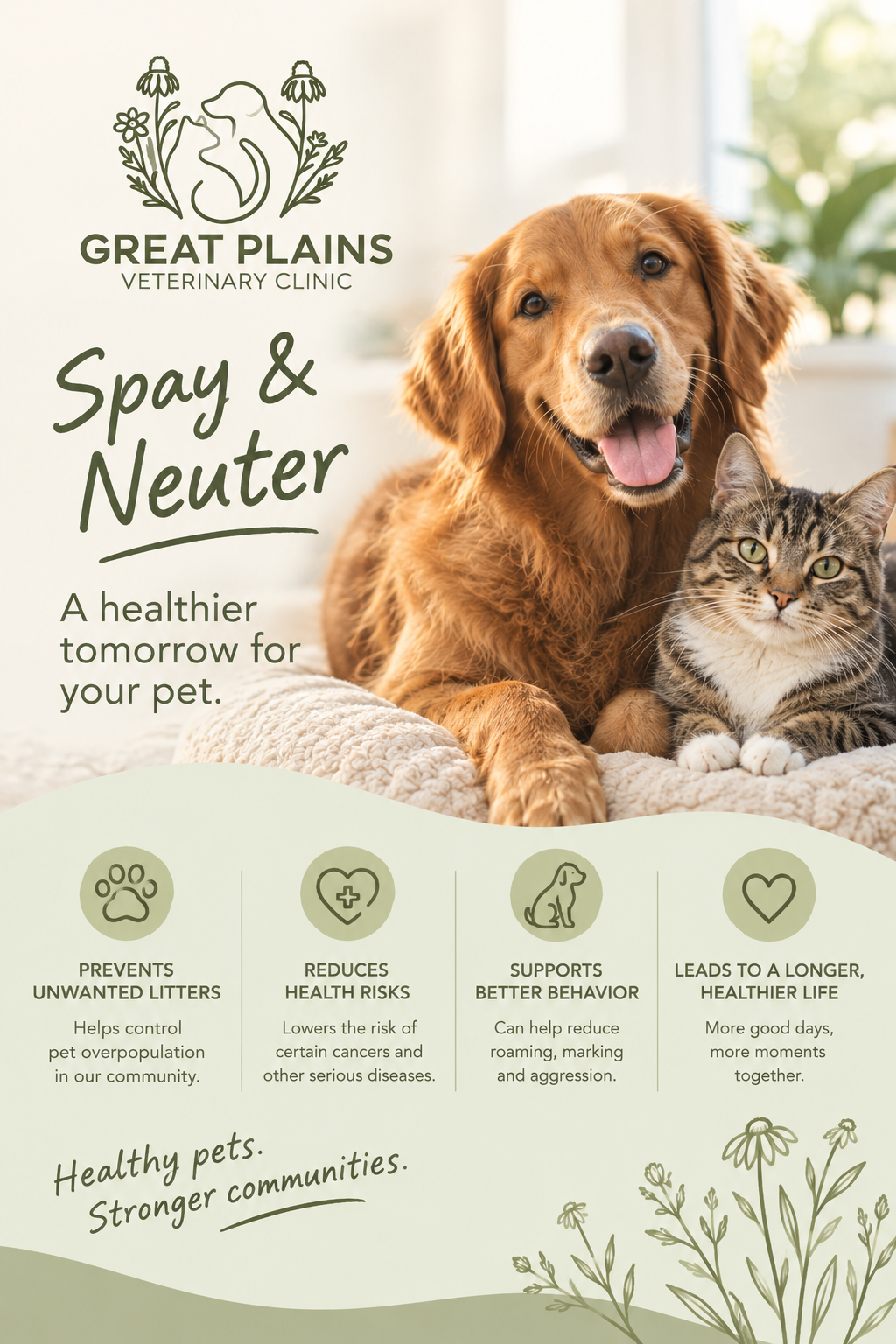
Spaying and Neutering in Vaughn, MT

Six months has been the standard answer for so long that plenty of pet owners assume the calendar decides for them. Breed, adult size, sex, and the kind of life an animal leads all belong in the conversation, and a big working dog near Fort Shaw has different needs than a house cat in Great Falls. Spaying and neutering still carry clear benefits for health, behavior, and population control. However, the timing deserves more thought than a single number on a chart. At Great Plains Veterinary Clinic, we perform spay and neuter procedures for dogs and cats across Vaughn, Sun River, Fort Shaw, Power, Cascade, and the Great Falls area. Dr. Jessica Johnson and our team talk through the recommendation, the preparation, and the recovery before anything gets on the schedule, and our surgical services cover a broader range of procedures handled right here in Vaughn. Our goal is the same one we bring to every visit: help your pet live their best life with you.

What Does Spaying and Neutering Involve?

Spaying refers to the surgical removal of a female animal’s ovaries and uterus, while neutering refers to the removal of a male animal’s testicles. Both procedures are performed under general anesthesia and prevent reproduction permanently. They also lower the risk of certain reproductive cancers and infections, and they often reduce hormone-driven behaviors such as roaming, urine marking, and vocalizing during heat cycles.
Spaying (Female)
Surgical removal of the ovaries and uterus. Prevents reproduction, eliminates heat cycles, and reduces the risk of uterine infections and reproductive cancers.
Neutering (Male)
Surgical removal of the testicles. Prevents reproduction and often reduces roaming, urine marking, and other hormone-driven behaviors that create risk in a rural environment.
Those behavior changes carry extra weight in rural Montana. A dog who roams has highways, livestock, and predators to contend with, and a barn cat who reproduces freely can turn into a colony of twenty within a couple of seasons. Sterilization pairs naturally with the rest of your animal’s wellness and preventive care, including vaccinations and parasite prevention.

Choosing the Right Age to Spay or Neuter Your Dog or Cat

The old default was six months for every dog, and for many pets that timing still works well. Research over the past decade has complicated the picture for larger breeds. Researchers at the University of California, Davis, published updated guidelines covering 40 dog breeds after reviewing more than a decade of hospital records, and they found the risk of certain joint disorders and cancers tied to early neutering varies widely by breed and sex. Their conclusion was to make the decision personal rather than universal.

At Great Plains Veterinary Clinic, we take the same approach. For dogs, we weigh four factors before making a recommendation:

Breed
Vulnerability to joint disorders and cancers varies significantly across breeds and cannot be assumed from size alone.
Expected Adult Size
Larger breeds tend to benefit from waiting longer before sterilization, as sex hormones play a role in healthy bone and joint development.
Sex
The same breed can carry different risk profiles for males versus females, which is why sex is always part of the conversation.
Daily Life
Whether your dog rides fence lines or plays catch in the backyard, how they spend their days shapes what timing works best.

For cats, early sterilization is generally straightforward, and our recommendation usually lands before the first heat cycle.

What to Expect on Surgery Day

Most of the worry around a spay or neuter comes from not knowing how the day unfolds, so here is the sequence we typically follow:

1
Pre-Surgical Exam
We examine your pet, review their history, and answer your questions before anything is scheduled.
2
In-House Diagnostics
Our on-site laboratory, digital X-ray, and ultrasound let us gather information without shipping samples out of town.
3
Anesthesia and Monitoring
Your animal stays under general anesthesia with our team monitoring them from the first breath to the last suture.
4
Same-Day Discharge
Most pets head home with you the same day rather than staying with us overnight.
5
Written Aftercare
You leave with recovery instructions in hand and an open door for follow-up questions.

Recovery for a healthy young animal is usually quiet and uneventful, with restricted activity for a stretch of days and a recheck if anything looks off.

Our Monthly Spay and Neuter Clinics in Cascade County

We work with Pet Pawsee and the Cascade County Humane Society to address pet overpopulation across the region. Much of that effort is trap, neuter, and return work for feral and stray cats, brought to us by volunteers and handled at a reduced cost.

Monthly
How often we run community clinics in Cascade County
~20
Cats cared for in a single clinic day through trap, neuter, and return
2
Community partners: Pet Pawsee and the Cascade County Humane Society

We have also started bringing other veterinarians in to build their spay and neuter skills so the effort can grow beyond our clinic.

Why Vaughn and Great Falls Families Choose Great Plains Veterinary Clinic

Our clinic is locally owned and operated, and every treatment plan gets built for the animal in front of us rather than pulled off a shelf. We explain costs before procedures, lay out the options without pressure, and give you the information to make the call yourself. Kindness and good medicine belong together, and low-stress handling is part of how we get there.

You can read more about Dr. Johnson’s background and the range of animals she has cared for, from companion pets to show pigs. Clients tend to stay with us because they feel heard, and their animals get treated like family.

Ready to Talk Through Timing?
Dr. Jessica Johnson and our team are here to look at your animal’s full picture and give you a recommendation that actually fits their breed, size, and life.
Schedule Spay or Neuter Care With Great Plains Veterinary Clinic

Spaying and neutering rank among the most routine procedures in veterinary medicine, and they still deserve a real conversation about timing, anesthesia, and recovery. Dr. Jessica Johnson graduated from the University of Illinois College of Veterinary Medicine in 2017 and has cared for animals large and small throughout her career. We accept all major pet insurance providers, work directly with Trupanion, offer a 5% military discount, and take CareCredit and ScratchPay, all covered on our payment options page.

Whether you are scheduling for a puppy from a Sun River litter, a kitten found in a Choteau barn, or an adult dog you just brought home, we can look at the whole picture and give you a recommendation grounded in your animal’s needs. When you are ready to talk it through, contact our team to get your pet’s spay or neuter consultation on the calendar.
What Our Patients say

we offer state and international health certificates for dogs and cats

Your pet health matters

Let’s work together to give your pet the happy, healthy life they deserve.