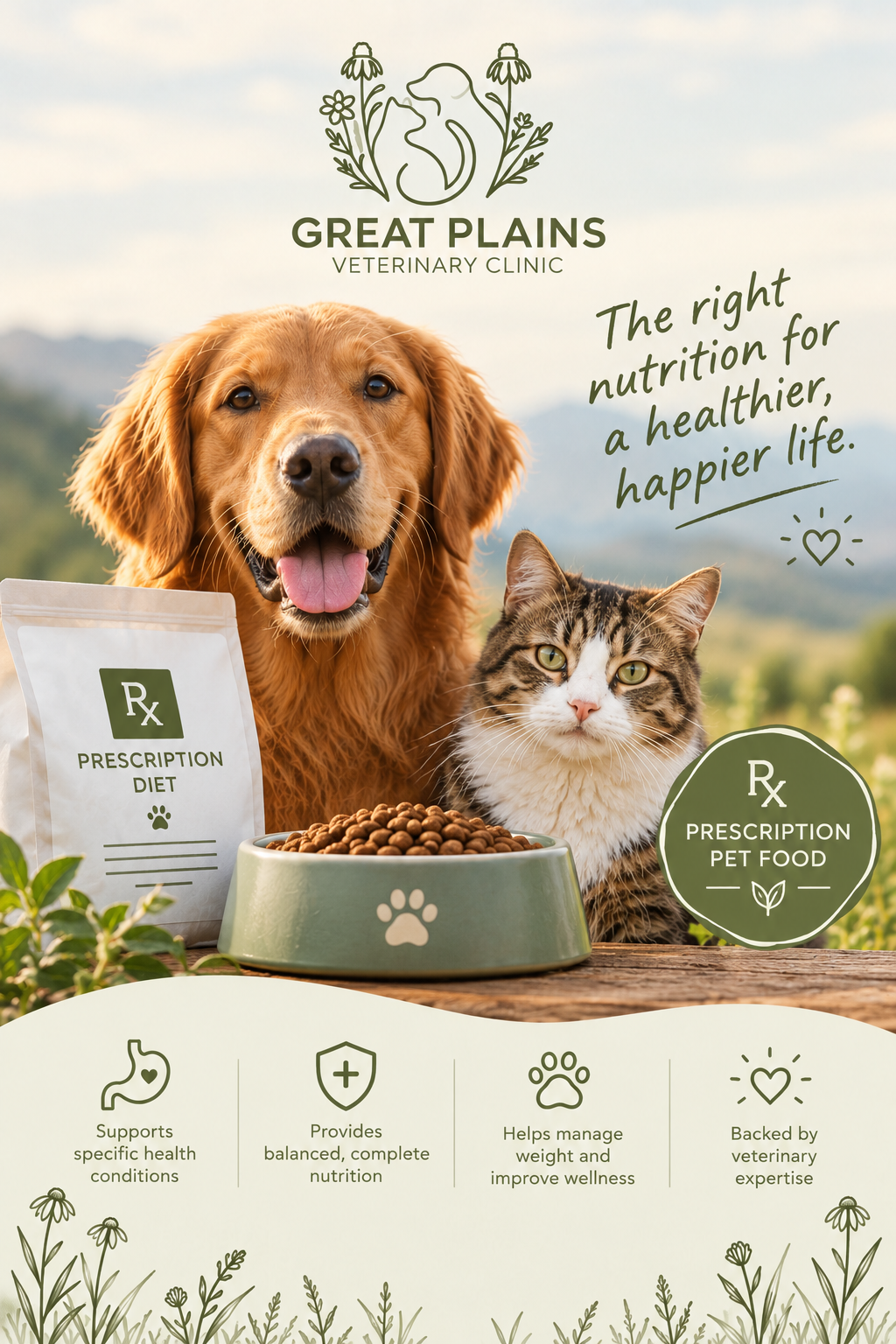
A bag of prescription pet food often looks the same as the stuff you find on the grocery store shelf, but costs more. So what’s the difference? The answer is formulation. Therapeutic diets are built to change how a body works, dialing protein, phosphorus, fiber, and mineral levels into a range precise enough to slow kidney disease, dissolve bladder stones, or quiet an immune system reaction. Food doing that kind of work belongs under veterinary direction.
At Great Plains Veterinary Clinic in Vaughn, we treat nutrition as part of the medical plan rather than an afterthought at checkout. Dr. Jessica Johnson reviews your pet’s diagnosis, bloodwork, body condition, and daily routine before recommending a therapeutic diet, then dispenses it through our pharmacy alongside the medications and monitoring your pet’s case calls for. Families across Cascade County rely on us to make those recommendations clearly and without pressure.
Over-the-counter pet food is designed to keep a healthy animal healthy. It meets the nutrient profiles established by the Association of American Feed Control Officials for a given life stage, which is exactly what most pets need. Therapeutic diets start from a different premise. They deliberately move nutrients outside the ordinary maintenance range to manage a diagnosed disease, and feeding one to the wrong pet can cause real harm.
A low-phosphorus renal formula supports a cat with failing kidneys and shortchanges a growing kitten. A calorie-restricted diet helps an overweight beagle and undermines a working dog covering open country in February. We match the diet to the patient during wellness and preventive care visits rather than guessing from symptoms alone.
Proper nutrition is essential across several of the conditions we see most often in dogs and cats. These conditions include the following:
Some of these diets replace a medication outright, others work alongside one, and a few pair with professional dental care to hold the results in place.
Prescription products require a valid veterinarian, client, and patient relationship before dispensing, and therapeutic diets fall under the same standard as medication. Practically speaking, the exam protects your pet. A cat losing weight might have kidney disease, hyperthyroidism, diabetes, or two at once, and each points toward a different formula.
Diagnostics also give us a baseline to measure against. The American Animal Hospital Association recommends a nutritional assessment at every exam visit and notes the accepted benefit of proper nutrition in conditions including chronic kidney disease, diabetes mellitus, and osteoarthritis. We follow the same rhythm, rechecking bloodwork and body condition on a schedule so we can adjust or discontinue a diet as the picture changes.
A prescription diet works only when it makes up nearly everything a pet eats. Jerky from the counter, a chew from the grocery aisle, or a strip of bacon at breakfast can reintroduce the exact protein, sodium, or phosphorus load the diet was built to limit. Most owners have no idea it is happening, and follow-up bloodwork is usually what reveals it.
We would rather solve the problem than ask you to stop rewarding your dog or cat. Many therapeutic lines include matching treats, and setting aside a small portion of the day’s measured kibble makes a reliable training reward at no nutritional cost.
We care for dogs and cats across Vaughn, Sun River, Fort Shaw, Power, Cascade, Choteau, and the surrounding Great Falls area. New clients are welcome, and current clients can ask about refills at the next recheck. To get your pet’s nutrition plan started, contact our clinic to request an appointment.

Let’s work together to give your pet the happy, healthy life they deserve.