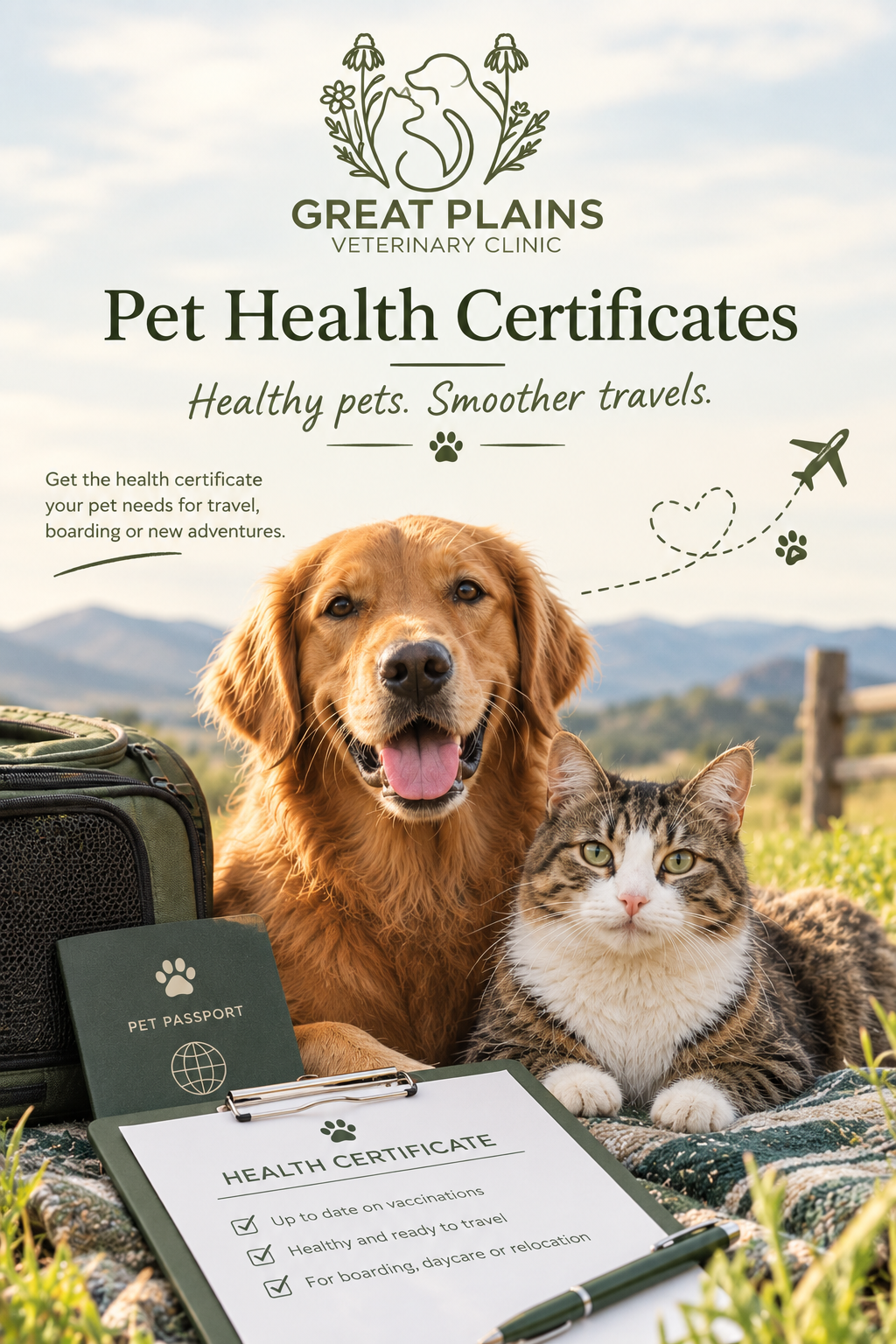
A move can come together in a matter of weeks, right up until an airline agent asks for a health certificate your dog does not have. Travel paperwork is the one part of a trip you cannot handle at the last minute, because a pet health certificate involves a hands-on exam, a validity window, and often vaccines or lab work scheduled weeks or even months in advance. Knowing what your destination asks for, and when the clock starts, keeps a big trip or move from falling apart at the gate.
At Great Plains Veterinary Clinic, we issue domestic and international health certificates for dogs and cats across Cascade County, and we build the timeline backward from your travel date so nothing gets missed. Dr. Jessica Johnson is USDA accredited, which allows her to complete and submit the federal forms most destinations require. This service fits naturally alongside our wellness and preventive care, because the exam findings, vaccine records, and microchip numbers behind the paperwork are the same details we track to keep your animals healthy at home.
A health certificate, also called a certificate of veterinary inspection, is a signed statement from an accredited veterinarian confirming your pet was examined, showed no evidence of infectious disease, and meets the entry conditions of wherever you are headed. It is not one universal form. The version your dog or cat needs depends on the destination, the species, and how you are traveling, and each certificate stays valid for only a limited number of days after the exam.
Requirements also shift more often than most people expect. The Centers for Disease Control and Prevention put updated dog importation requirements into effect on August 1, 2024, and what your dog needs to re-enter the country now depends on where it was vaccinated and which countries it has visited in the previous six months. Because the rules move, we verify current requirements at the time of your appointment rather than relying on what applied last year, and we can review the other veterinary services your pet may need before departure.
Crossing state lines carries its own set of rules, and the destination state sets them. Some states ask for a certificate issued within 30 days of entry, others use a shorter window, and nearly all want proof of current rabies vaccination on the document itself. Airlines, breed registries, and event organizers may request their own copy as well, so gathering every requirement before the appointment saves a second trip.
For a domestic certificate, we examine your pet, record a full description including age, sex, color, and breed, and list the rabies vaccine date and serial number. If your dog or cat has fallen behind on protection, we can bring those records current during the same visit, which is one more reason vaccinations matter well before a trip lands on the calendar.
International travel is where the details get picky, and where an early start pays off the most. Every country sets its own entry conditions, so we open with a consultation, pull the checklist for your destination, and map each step against your flight date.
Most international certificates involve some combination of the following pieces:
Timelines get tightest for families stationed at Malmstrom Air Force Base, where orders sometimes arrive three months out while a destination such as Japan expects rabies testing completed six months before departure. We have found workable paths in those situations before, and our front desk is trained to get travel consultations booked quickly so we have room to talk through the options together.
Paperwork is only as reliable as the practice completing it. Dr. Jessica Johnson graduated from the University of Illinois College of Veterinary Medicine and has worked with animals both large and small throughout her career. She built Great Plains Veterinary Clinic around client education and honest recommendations. This shows in how we handle travel documents: we explain the reason behind each requirement, review costs before we proceed, and tell you plainly when a timeline is too tight.
We accept all major pet insurance providers, work directly with Trupanion, take CareCredit and ScratchPay for larger expenses, and offer a military discount for service members and their families. When you are ready to build a travel timeline, reach out to our office with your destination and departure date.
Let’s work together to give your pet the happy, healthy life they deserve.