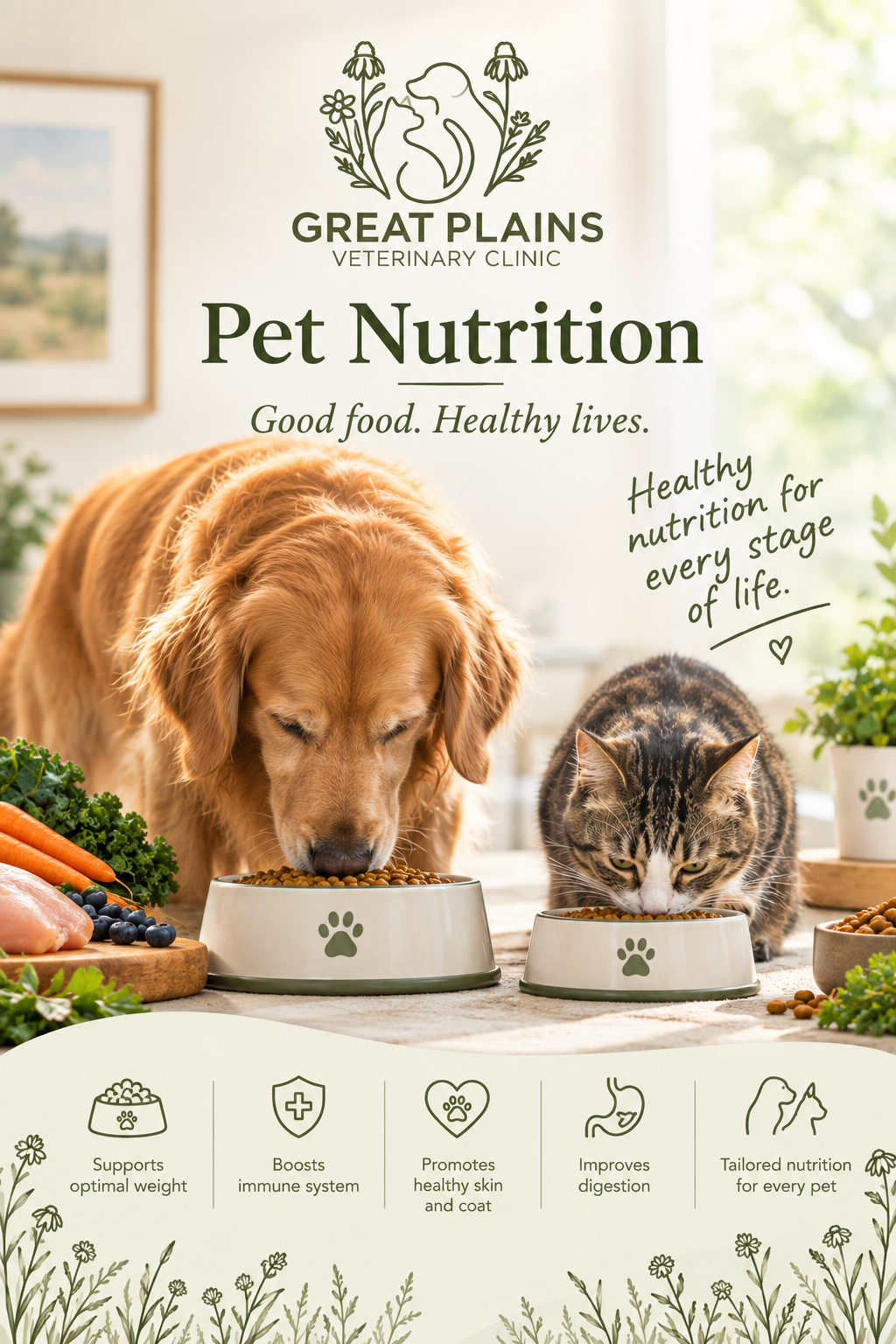
The bag in your mudroom promises complete nutrition, but your dog still gains those extra pounds every winter. Feeding an animal well in central Montana is rarely as simple as following the chart printed on the label, especially when a working dog burns calories hauling through February snow and then spends July napping in the shade. What your pet eats shapes their energy, their joints, their coat, and how comfortably they age. A feeding plan built around your specific animal will always beat a guess.
At Great Plains Veterinary Clinic, nutrition comes up in nearly every appointment, and it is a standard part of wellness and preventive care for pets in Vaughn and the surrounding communities. Dr. Jessica Johnson reviews body condition, activity level, life stage, and any existing health concerns before she recommends anything, then explains her reasoning so you can make the call for your household. Honest recommendations and no pressure are how we prefer to work.
A nutrition consultation begins with measurement instead of opinion. We weigh your pet, assign a body condition score, ask what goes in the bowl and how often, and account for the treats and table scraps rarely counted at home. According to Cornell University’s Riney Canine Health Center, about 60 percent of dogs in the United States now carry more weight than they should, and treats and table foods can supply close to 20 percent of a dog’s daily calories.
You leave with a plan you can follow on a normal weekday. Depending on what we find, the plan may involve:
When weight refuses to move despite steady effort, we look for medical explanations, including thyroid disease, hormonal conditions, or arthritis limiting activity.
Two dogs of the same breed and weight can sit in very different places on a body condition chart, which is why we assess fat coverage rather than pounds alone. Running your hands along your pet’s ribs, viewing them from the side, and looking down from above tells us more than a scale does. At an ideal body condition, ribs are easy to feel without a thick layer over them, the waist is visible from above, and the belly tucks up behind the ribcage.
Small changes here pay off over years. Extra weight raises the risk of joint disease, diabetes, breathing trouble, and reduced comfort in later life. Modest, steady loss can improve mobility and energy well before a pet reaches an ideal number. If you have wondered whether your pet is at a healthy weight, we are happy to give you a straight answer and a starting point.
A diet appropriate at eight weeks is rarely appropriate at ten years, so feeding recommendations shift as your pet grows and ages. Each of the following stages carries its own priorities:
Nutrition plays a key role in comfort and mobility, which matters a great deal when you are supporting a senior pet as they age. We revisit feeding at each annual visit so the plan keeps pace with your pet.
We spend real time on education because a feeding plan only works if it makes sense to the person scooping the food. We explain costs before you commit to a therapeutic diet, offer over-the-counter options when they are a reasonable fit, and never judge how a pet arrived at their current weight. Diet also influences oral health, so we often pair nutrition guidance with routine dental care when tartar is already building.
Rural households in Vaughn, Sun River, Fort Shaw, Power, Cascade, and the greater Great Falls area often keep several animals with very different needs under one roof. A retired barn cat, a hardworking stock dog, and a young house dog should not all eat the same amount of the same food. We build recommendations around the animals you actually have, and we adjust as seasons, activity, and age change what they need.
We accept all major pet insurance providers and work directly with Trupanion, meaning claims are billed to us rather than reimbursed to you later. CareCredit and ScratchPay are available for larger expenses, and active military families receive a discount. To get a feeding plan built for your pet rather than an average one, schedule a nutrition consultation with our team.

Let’s work together to give your pet the happy, healthy life they deserve.