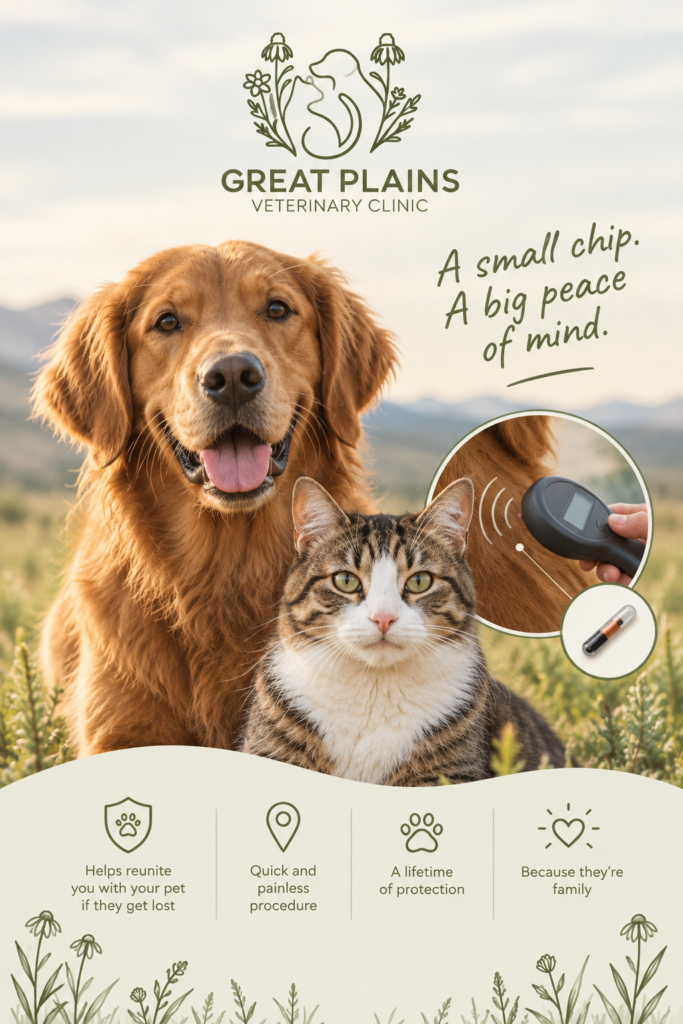
Most animals that go missing were never actually trying to run away. Maybe a gate accidentally gets left open, a dog follows a scent off the road, or a cat slips out behind a delivery driver. Collars and tags help, but they can also come off, fade, or become difficult to read over time. A microchip is a small implant, roughly the size of a grain of rice, that carries a unique number linking your animal directly back to your contact information — a form of identification your pet can never lose.
Great Plains Veterinary Clinic places microchips for dogs and cats across Vaughn, Sun River, Fort Shaw, Power, Cascade, Choteau, and the Great Falls area. As part of our wellness and preventative care services, microchipping can be completed at a routine visit, alongside vaccines, or while your pet is already under anesthesia for a scheduled procedure, so most families never need a separate trip. We complete registration before you leave so the chip number is tied to your contact information the moment you walk out the door.
The chip has no battery, no GPS, and no medical records stored inside it. It rests under the loose skin between the shoulder blades and does nothing until a handheld scanner passes over it, at which point it transmits one number. A shelter worker, animal control officer, or veterinary team member reads that number, looks it up in a national registry, and contacts whoever is listed on file. Placement takes only a few seconds and feels much like a routine vaccine injection, so anesthesia is not required.
The difference a chip makes is measurable. According to research cited by the American Veterinary Medical Association, microchipped dogs were returned to their owners at more than twice the rate of dogs without chips, and microchipped cats were reunited with their families at a rate more than 20 times higher. The most common reason microchipped pets are still not returned is an incorrect or disconnected phone number on file, which is why we prioritize registration and encourage owners to update their information any time their contact details change.
Rural Montana changes the math on a lost animal. A dog that slips out in town often turns up two streets over, but a working dog that picks up a scent off a ranch road can cover several miles before anyone notices it is gone. The distances between communities here are real, and the person who eventually loads your dog into their truck may live in an entirely different town.
A chip is built for exactly that situation. Whoever finds your dog or cat does not have to guess, post photos, or hope you happen to see a flyer, because one scan at any clinic or shelter pulls up your phone number. Animals that move between the house, the shop, and the pasture get more chances to wander than most, and permanent identification gives them a way home from any of those places.
Identification matters long before anything goes wrong, too. A microchip is required for most international pet travel, and it generally needs to be in place before certain vaccines and blood tests count toward a destination country’s entry timeline. Our clinic is accredited to issue domestic and international health certificates, and we work from country-by-country checklists so you know exactly what has to happen and in what order. We have experience helping military families navigate the specific timelines involved when orders come in with less lead time than a standard travel plan allows.
We keep the visit short and calm, and the process is the same whether your animal is eight weeks old or eight years old. Here is what we walk through at every microchip appointment:
If your animal already has a chip from a shelter or breeder, we can scan it, identify which registry holds the record, and help you transfer the listing into your name. You can also review answers to common questions on our FAQ page or explore our pet care guides for additional resources.
Permanent identification is one of the simplest, most lasting things you can do for an animal you plan to keep for years to come. Dr. Jessica Johnson, owner and lead veterinarian at Great Plains Veterinary Clinic, earned her degree from the University of Illinois College of Veterinary Medicine in 2017 and has cared for animals both large and small throughout her career. Our locally owned clinic is built around individualized care, plain-spoken communication, and the kind of follow-through that comes from genuinely knowing your patients. You can learn more about our approach on our meet Dr. Johnson page, or explore our full range of veterinary services.
Whether you are adding a chip for a new puppy, catching up on identification for a working dog, or starting the documentation process for an international move, our team is glad to walk you through every step. Contact us to get your animal scheduled.
Let’s work together to give your pet the happy, healthy life they deserve.